
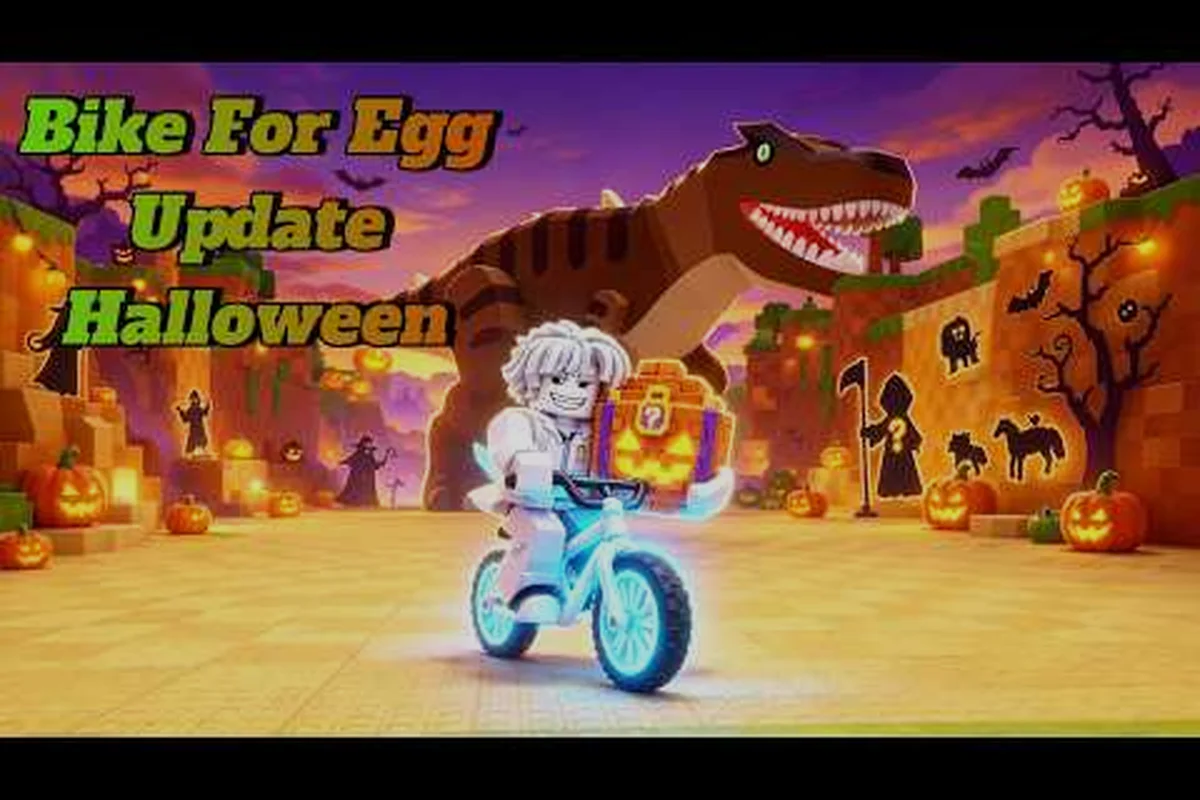
The Bike For Egg version history reads like a short, sharp lesson in how a small Roblox game grows up fast, and every entry reshaped how pets, bikes, and rewards actually work. Knowing the order of these patches matters because older guides still float around describing systems that no longer exist, and a returning player can waste hours chasing a mechanic the developers already replaced.
Why the Bike For Egg Version History Matters to Players
Tracking the Bike For Egg version history is not trivia for completionists. Each content update changed the economy in ways that still affect how you spend eggs and time today, and the differences between early and late patches are big enough that outdated advice can actively hurt your progress. The Halloween big update alone rewrote the seasonal reward loop and added a whole new bike tier.
The overall trajectory is best read as three distinct eras rather than a smooth curve: early builds where the ride-and-collect loop ran on a tiny pet roster with no seasonal content, mid-cycle content updates that layered in new egg types, an expanded pet pool, and the first reward multipliers, and the Halloween holiday update that introduced the Halloween Bike, event pets, and seasonal egg types while renaming the game listing with a pumpkin prefix. Each era reset the value of your existing inventory, which is why patch-specific knowledge matters more than raw playtime.
-
Early builds focused on the core ride-and-collect loop with a tiny pet roster and no seasonal content at all.
-
Mid-cycle content updates introduced new egg types, expanded the pet pool, and added the first reward multipliers.
-
The Halloween holiday update added the Halloween Bike, event pets, and seasonal egg types, and renamed the game listing with a pumpkin prefix.
-
Ongoing tweaks adjusted drop rates, fixed progression blockers, and rebalanced late-game rewards.
The single most useful takeaway is that the game's identity shifted from a simple grind to an event-driven experience: early builds rewarded raw ride time, but the Halloween big update tied the best rewards to limited seasonal windows, so players who understand that shift now bank eggs ahead of an event and spend them inside it rather than grinding blindly year-round. That timing discipline matters most for the Halloween Bike tier and event pets, which are only farmable while the seasonal egg types are live.
The Early Content Updates That Built the Core Loop
The first Bike For Egg content updates were small in scope but set the foundation everything else sits on. According to community reports and player experience, the earliest builds shipped with a limited pet roster and a straightforward egg-to-pet pipeline, which meant the entire game hinged on how fast you could ride and how lucky your hatches were.
What the First Patches Actually Changed
Early patches mostly tuned numbers rather than adding features. Drop rates for common eggs were adjusted several times, and the developers experimented with how quickly players could chain rides together. The result was a loop that felt tighter but still lacked the variety that later updates would bring.
| Patch Era | Main Focus | Player Impact |
|---|---|---|
| Launch build | Core ride-and-collect loop | Simple but shallow pet pool |
| First tuning pass | Egg drop rates | Faster early hatches |
| Second tuning pass | Ride chaining speed | Smoother grind rhythm |
| Pre-season build | Reward multipliers | First real progression boost |
These changes rarely made headlines, but they explain why veteran players describe the early game as "fast but thin" — you could hatch a lot quickly, yet there was little reason to keep going once you had the basics. The second tuning pass illustrates the pattern: speeding up ride chaining made the grind rhythm smoother, but because the pre-season build's reward multipliers hadn't arrived yet, faster rides only meant more common-egg hatches feeding a shallow pet pool. The launch build's simple ride-and-collect loop stayed intact through both tuning passes, so each drop-rate and chaining tweak sharpened the pacing without ever widening what you were grinding toward — efficiency rose, but depth didn't.
How the Pet Roster Expanded
The pet pool grew in waves rather than all at once. Each Bike For Egg new content drop added a handful of pets with slightly different rarity weights, and the community quickly mapped which eggs were worth farming. That mapping is still useful today, because the rarity structure established in these early patches carried forward into later events.
The Halloween Big Update and Seasonal Content
The Halloween holiday update is the headline moment in the Bike For Egg version history, and it is the patch most players remember. It arrived as a full seasonal package rather than a small tweak, and it changed the game's presentation, its reward structure, and its pet lineup all at once.
For a complete walkthrough of the version history, see the Bike For Egg gameplay video, which documents the changes across releases.
What the Halloween Patch Added
| Feature | Before the Update | After the Update |
|---|---|---|
| Bike options | Standard bikes only | Standard plus Halloween Bike |
| Pet pool | Base roster | Base roster plus event pets |
| Egg types | Standard eggs | Standard plus seasonal eggs |
| Listing name | Plain title | Pumpkin-prefixed title |
| Reward loop | Year-round | Seasonal window with event rewards |
The practical effect is that players who logged in during the event had access to pets and a bike that latecomers simply cannot obtain the same way, which is why the seasonal window matters so much for collectors. Because the Halloween Bike and event pets were tied to the Pumpkin-prefixed listing rather than folded into the permanent standard pool, there is no year-round egg or shop route to acquire them once the event closes — a latecomer starting after the window shuts can grind standard eggs indefinitely and still never roll those specific rewards. This is the same pattern the version history shows across other holiday updates: limited-time rewards stay locked to their debut window instead of migrating into the base roster, so the only reliable path for a collector is logging in while the seasonal egg is still live.
Why Seasonal Windows Change Your Strategy
A holiday update compresses value into a short period. If you miss it, you are not permanently locked out of progression, but you do lose the chance to grab limited event pets at their original drop rates. Community players consistently report that event windows are the best time to spend saved eggs, because the seasonal egg pool dilutes the standard pool with higher-value outcomes.
The full breakdown of spooky pets and rewards lives in the Halloween update guide, which walks through which event pets are worth chasing and how the seasonal eggs behave. That guide matters most for players deciding where to park their saved eggs before a window closes: it ranks the Halloween pet pool by drop value so you can compare a limited event pet against the standard egg roster, and it flags which seasonal eggs are worth opening in bulk versus holding. Pair it with the version history timeline above to see exactly which patch introduced each seasonal egg pool, so you know whether a returning event pet is a rerun or a first-time release.
How Each Patch Reshaped Pets, Bikes, and Rewards
The Add-Then-Tune Cycle
Every major addition has been followed by a tuning pass. The Halloween big update added new pets and a new bike, and subsequent patches adjusted how those items interacted with the existing economy. Players who expect a fresh update to be perfectly balanced on day one are usually disappointed, while players who wait a week for the tuning pass tend to have a smoother experience.
-
Addition patches bring new pets, bikes, or egg types and temporarily inflate the value of whatever is new.
-
Tuning patches adjust drop rates and reward multipliers to bring the new content in line with the rest of the game.
-
Fix patches address progression blockers, which are the most frustrating bugs because they can stall a run entirely.
Reward Multipliers Over Time
Reward multipliers have trended upward across the version history, which is a deliberate design choice to keep long-term players engaged. Early builds offered modest multipliers, while later patches layered seasonal bonuses on top. The table below summarizes the general trend rather than exact values, since precise numbers shift with each tuning pass.
| Version Stage | Reward Multiplier Trend | Best Use Case |
|---|---|---|
| Launch | Baseline | Learning the loop |
| Early tuning | Slight increase | Fast early hatches |
| Pre-season | Moderate increase | Building a pet base |
| Halloween era | Seasonal spikes | Event egg farming |
This timing logic explains why the Halloween era's seasonal spikes outperform the pre-season's moderate increase for dedicated egg farming: stacking a seasonal bonus on top of the already-raised baseline yields a far larger effective multiplier than grinding through the flat mid-year patches. Players who track the version history therefore bank their longest Bike For Egg grinding sessions for these event windows, prioritizing Halloween-era egg farming over steady daily play, since a single well-timed session during a spike can outproduce several weeks of evenly spread baseline runs.
Reading the Patch Notes Like a Veteran
The Bike For Egg version history is only useful if you can translate patch notes into action. Most players skim changelogs and miss the details that actually matter, so here is a practical way to read them. Start by sorting each entry into one of three buckets: Bike For Egg new content (new egg types, biomes, or bike parts), balance tweaks (egg weight, spawn rates, or stamina costs), and bug fixes. Then cross-reference the numbers against your current build — a "minor" egg-weight adjustment can quietly break a jump line you relied on in the previous Bike For Egg content update, while a holiday update often hides limited-time cosmetics behind event-only spawns. Before a Bike For Egg big update drops, screenshot your best runs and note your route timings, so you can measure exactly what the upcoming changes shifted rather than guessing from memory.
What to Look For First
Start with anything that mentions drop rates, egg pools, or reward multipliers, because those three categories affect your economy more than cosmetic changes ever will. A single drop-rate tweak can make an entire farming route obsolete overnight, and players who notice it early gain a real advantage.
-
Check whether new pets were added to existing eggs or to a separate seasonal pool.
-
Look for wording like "adjusted" versus "added" — adjusted means rebalancing, added means new content.
-
Note any mention of the game listing name, since a rename usually signals an active event.
When to Wait and When to Grind
The safest rule is to grind hard during the first days of a new event and then reassess after the first tuning pass. New content is usually at its most generous right after launch, and the tuning pass that follows tends to tighten things up. If you are chasing a specific event pet, the launch window is your best shot.
The update tracker keeps a running log of what changed in each patch, which is handy when you want to confirm whether a mechanic you remember is still live. Use it as a cross-check against the launch-window strategy above: if a tuning pass nerfed the event pet drop rate or rebalanced egg rewards, the tracker's patch notes will show the before-and-after values, so you can tell whether grinding is still worth it or whether you should bank resources for the next Bike For Egg big update. Bookmark the specific patch entries tied to each holiday update, since older changelogs are the only reliable record of how limited-time mechanics originally worked.
What the Bike For Egg Upcoming Changes Might Bring
Speculation about Bike For Egg upcoming changes runs hot in the community, and while nothing is confirmed until the developers post it, the version history gives strong hints about what comes next. The pattern of seasonal events followed by tuning passes suggests future holidays will get similar treatment.
Trends to Watch Across Versions
Every seasonal event so far has followed the same template: a themed bike, a batch of event pets, seasonal egg types, and a listing rename. If that template holds, players can expect future holiday updates to deliver the same package with a different theme. That predictability is genuinely useful, because it lets you prepare eggs and time in advance.
| Predicted Change | Basis in Version History | Confidence |
|---|---|---|
| New seasonal bike | Every holiday update added one | High |
| Event pet batch | Consistent across events | High |
| Seasonal egg types | Introduced with Halloween | Medium |
| Listing rename | Standard event signal | High |
| Permanent new pets | Less common historically | Low |
The next update breakdown tracks leaks and announcements as they appear, so you do not have to dig through scattered posts to find out what is coming. It matters most for the low-confidence rows above: a permanent new pet would break the seasonal template for the first time, and a datamined seasonal egg type is the earliest reliable signal that a holiday event is actually in progress rather than merely rumored. Treat each leak as provisional until the listing rename confirms it, since that rename has preceded every event so far.
How to Prepare Between Events
Between seasonal windows, the smart play is to bank eggs and build a stable pet base rather than chase marginal gains. Players who enter an event with a stocked inventory can farm the seasonal pool aggressively from day one, while unprepared players spend the first week just catching up. The end game guide covers daily task routines and auto collect setups that keep your resources growing even during quiet periods.
Frequently Asked Questions
What was the biggest update in Bike For Egg version history?
The Halloween holiday update is widely considered the biggest, because it added the Halloween Bike, event pets, and seasonal egg types all at once while renaming the game listing. Earlier patches were mostly tuning passes, so the Halloween patch stands out as the first true content expansion.
Did the Halloween update remove any old pets?
No. Based on community reports, the Halloween patch added to the existing pool rather than replacing it. Standard pets and standard eggs remained available, and the seasonal additions sat alongside them as a separate limited-time layer that only appeared during the event window.
How often does Bike For Egg get new content?
The release rhythm has been irregular, with clusters of small tuning patches followed by larger seasonal drops. Community players note that holiday windows tend to bring the biggest changes, while the stretches between events are usually reserved for balance fixes and progression bug repairs.
Can I still get Halloween event pets now?
Only if the event is active or returns. Seasonal pets are tied to their event window, so once it closes, the original drop path is gone. Players who missed it should watch for a rerun announcement rather than expect the pets to reappear in standard eggs.
Are upcoming changes confirmed anywhere official?
The developers post announcements through their official channels, and the community tracks them closely. Anything not posted there should be treated as rumor, even when the version history pattern makes a prediction look likely. Wait for confirmation before spending saved eggs on a guess.
The Bike For Egg version history ultimately tells one story: a small game that learned to run seasonal events well, and players who read that story can time their grinding, banking, and spending around the moments that actually matter. The pattern is consistent enough to plan around — quiet stretches of tuning patches are when you stockpile eggs and level standard pets, while holiday windows like the Halloween drop are when limited-time pets and seasonal egg types enter the pool. Because seasonal pets vanish once their event window closes, saved eggs are best held for a confirmed rerun rather than spent chasing standard-egg pulls during the off-season.