
Bike For Egg riding bikes is the skill that decides whether you ever touch a rare egg or just watch other players speed past you. Steering, throttle timing, and knowing when to bail out of a catch frame matter far more than the price tag on your ride, and this breakdown covers all three.
How Bike For Egg Bike Controls Actually Work
The control scheme in this Roblox experience is deliberately simple, which is exactly why small mistakes cost you so much time. You accelerate, you steer, and you commit — there is no brake pedal that saves a bad line. Understanding each input before you spend eggs on a faster frame is the single best investment a new player can make.
Most of the movement complaints in this game trace back to players treating the bike like a racing sim instead of a momentum toy. The vehicle carries speed through turns, so releasing throttle mid-corner usually scrubs more distance than holding it and correcting late. Community reports consistently describe the handling as "floaty but predictable" once you stop fighting it.
| Input | What It Does | Common Mistake |
|---|---|---|
| Forward / throttle | Builds and maintains speed | Tapping instead of holding |
| Left / right steer | Rotates the bike, not the camera | Oversteering into walls |
| Jump | Clears curbs and short gaps | Jumping mid-turn and losing speed |
| Dismount | Drops you off instantly | Bailing too early near a catch frame |
| Camera drag | Adjusts your view angle | Fighting the auto-follow |
Throttle Discipline Beats Raw Speed
A slower bike ridden with clean throttle input will beat a fast bike that keeps clipping geometry. Hold forward continuously on open stretches, and only feather it when you are lining up a tight doorway or a ramp. The moment you start tapping, your momentum value decays and you lose the run.
Steering Without Losing Your Line
Steering rotates the bike around its own axis, so a hard turn bleeds speed fast. Aim for wide entry and a late apex — approach the corner from the outside, then cut in once you can see the exit. This single habit is the difference between arriving at an egg with speed and arriving with nothing left.
Bike For Egg Best Bike for Speed: What the Numbers Say
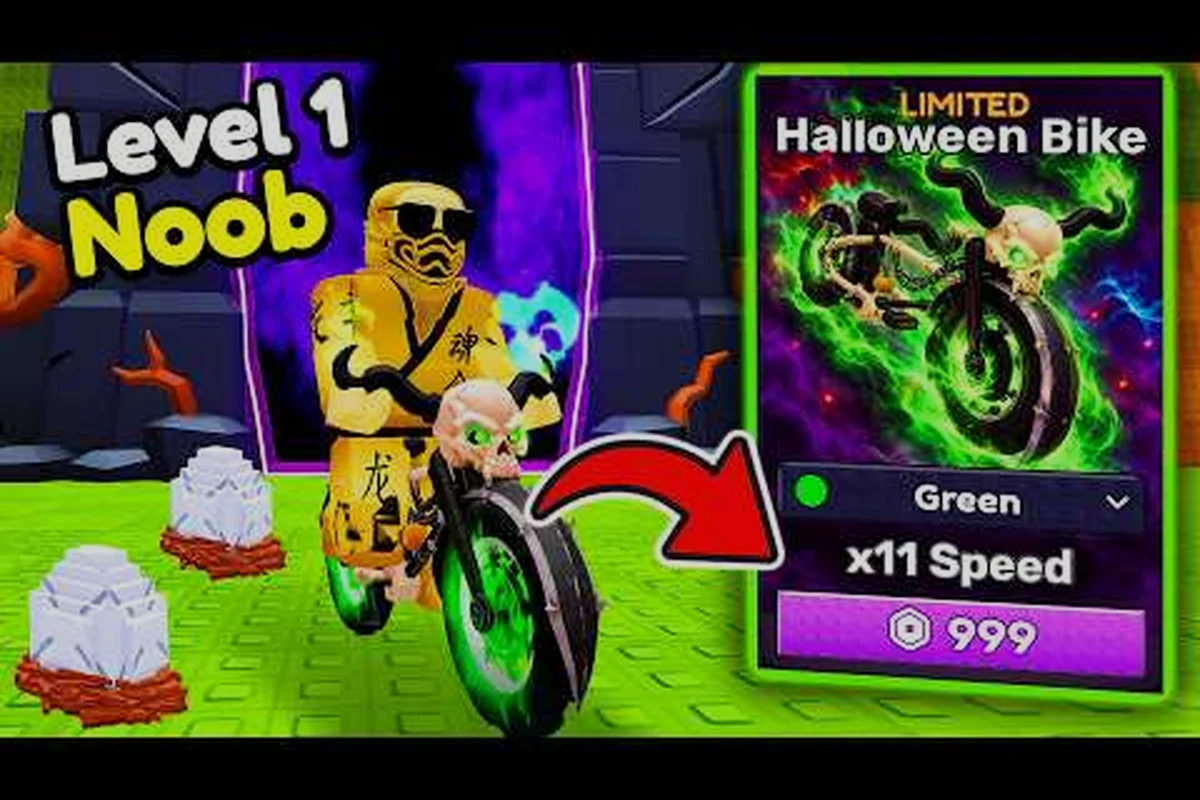
Every player eventually asks which ride is worth the eggs, and the honest answer depends on how far you still have to travel. Pricey frames multiply your top-end speed, and a fresh account that buys the most expensive option can reach distant egg spots far earlier than a normal noob run — a pattern shown clearly in LukeBlox's most expensive bike run, where the upgrade immediately reshapes how much map the player can cover per minute.
That said, "most expensive" and "best for you" are not the same thing. Early on, a mid-tier bike with clean handling will out-earn a top-tier bike you cannot control — the high-tier frame's twitchy steering at speed turns every sharp turn near an egg spawn into a crash, and each wipe costs you the eggs you were carrying plus the respawn time. A mid-tier frame's balanced handling lets you chain egg pickups without braking, so your effective eggs-per-minute stays higher even though the speedometer reads lower. Spend the difference on learning the map's egg routes first, then upgrade once your Bike For Egg bike controls feel automatic.
| Bike Tier | Relative Speed | Handling Feel | Best Use Case |
|---|---|---|---|
| Starter frame | Baseline | Forgiving, slow | Learning controls and routes |
| Mid-tier frame | Noticeably faster | Balanced | First real egg-stealing runs |
| High-tier frame | Large jump | Twitchy at speed | Long-distance egg routes |
| Top-tier frame | Highest ceiling | Demands clean input | Experienced players only |
Why Handling Matters More Than Top Speed
A top-tier bike punishes sloppy steering because every mistake happens faster. If you are still learning the map, spend one session on a mid-tier frame and focus purely on cornering. Once your lines are clean, the speed upgrade pays off immediately instead of turning every wall into a setback.
When to Upgrade
Upgrade when you notice you are losing time to distance rather than to mistakes. If your runs end because you clipped a fence, a faster bike makes that worse. If your runs end because the egg is simply too far away, that is your signal — the bike upgrades and shop breakdown walks through the purchase order that most players follow.
Bike For Egg How to Move Faster Without Buying Anything
You can gain real speed before spending a single egg, and these habits stack with any bike you eventually own. Free speed comes from route knowledge, jump timing, and not wasting motion — three things that cost nothing and never get nerfed.
-
Learn two routes per egg spot. A safe line and a fast line; use the fast one only when your bike is upgraded.
-
Chain jumps instead of stopping. A jump that lands you already pointed at the next stretch preserves momentum.
-
Cut corners on the inside of open terrain. There is no track limit, so the shortest legal path is usually the fastest.
-
Avoid vertical geometry. Ramps look fun but bleed speed unless they lead somewhere useful.
-
Dismount before the frame, not after. Running the last few steps is faster than a bad parking angle.
Route Memory Is Free Speed
The players who look fastest usually just know the map better. Spend one session deliberately taking the long way to each egg location and noting where the geometry pinches. That mental map converts directly into seconds saved on every future run, and it never requires an upgrade.
Momentum Chains and Jump Timing
Jumping at the crest of a slope carries your speed over the gap instead of into it. Practice the timing on flat ground first: jump, land, and immediately confirm you are still holding throttle. Once that feels automatic, apply it to the ramps on your regular route and watch your average run time drop.
Bike For Egg Bike Tips for Clean Egg Steals
Speed means nothing if you fumble the finish. The catch frame is where runs are won or lost, and the timing is tighter than most new players expect. Treat the approach as its own skill separate from riding, because the two fail in completely different ways.
| Phase | Action | Timing Window |
|---|---|---|
| Approach | Hold throttle until you see the frame | Wide, forgiving |
| Setup | Release throttle, aim straight | Roughly one bike length |
| Commit | Dismount and step in | Tight — do not hesitate |
| Exit | Remount and leave immediately | Immediate |
Approaching the Catch Frame
Line up straight rather than arriving at an angle, because a diagonal approach forces you to correct mid-dismount. Release throttle early enough that you coast in rather than skid in — a skid costs you the half-second you needed. The catch-frame steal timing guide covers the exact rhythm in more detail.
Bailing Out Safely
If you overshoot, do not try to save it with a hard turn. Remount, loop around, and take the approach again with a wider entry. Forcing a bad angle usually ends with you stuck on geometry, which costs far more time than a clean reset.
Bike For Egg Riding Bikes: Practice Drills That Build Real Skill
Deliberate practice beats grinding, and three short drills will fix almost every handling weakness a new rider has. The reason is that Bike For Egg rewards clean inputs over raw time played: a rider who repeats a controlled figure-eight for five minutes learns more about throttle-to-steer timing than one who spends an hour mashing keys in a straight line. Run each drill for a few minutes before a real session rather than after, when you are already frustrated and your inputs get sloppy.
-
Straight-line sprint: pick a long open stretch and hold throttle the entire way without touching steer. This teaches you how much distance pure momentum covers.
-
Figure-eight corners: ride slow circles and figure-eights, focusing on late apexes. You will feel exactly where speed bleeds.
-
Frame approach reps: approach a catch frame five times in a row, adjusting your release point each attempt until the dismount lands cleanly.
Scouting the Route Ahead at Speed
Scan the next ten seconds of your route rather than staring at your bike. Geometry that looks passable at low speed often clips you at high speed, so identify the pinch points early and choose your line before you arrive. This habit alone prevents most of the wall-slams that new riders blame on handling.
Building a Repeatable Run
A repeatable run has the same entry, the same line, and the same exit every time. Once a route is repeatable, you can measure improvements honestly instead of guessing. That measurement is what makes the bike level grind feel productive rather than random, because you can see exactly what each upgrade buys you.
Common Bike For Egg Riding Mistakes and How to Fix Them
Nearly every struggling rider makes one of four mistakes, and each has a simple correction — and the reason they cost so much speed is that all four interrupt the acceleration curve the game rewards. Tapping the throttle instead of holding it, steering with the camera rather than the movement keys, buying a faster bike before mastering the starter one, and hesitating at the catch frame all reset momentum you then have to rebuild. Fixing them costs zero Robux and typically produces a bigger speed gain than any single purchase, because a clean, uninterrupted acceleration line beats raw top-end stats every time.
-
Tapping throttle constantly. Hold it. Tapping resets your acceleration curve over and over.
-
Steering with the camera. Steer with the movement keys and let the camera follow.
-
Upgrading before learning. A fast bike amplifies bad habits instead of fixing them.
-
Rushing the catch frame. Coast in, then commit; hesitation at the frame is the most common lost run.
The Oversteer Trap
Oversteering feels productive because the bike responds instantly, but every correction costs speed. If you find yourself sawing the stick left and right, you are fighting the bike rather than guiding it. Pick a line, commit to it, and accept a slightly wider arc — the smooth line always wins.
Why Your Bike Feels Slow
If your bike feels sluggish despite an upgrade, check three things: whether you are holding throttle continuously, whether your route includes unnecessary ramps, and whether you are clipping geometry on corners. Speed in this game is mostly a measure of how little you waste, not how fast your frame is on paper.
Frequently Asked Questions
What are the basic Bike For Egg bike controls?
Hold forward to accelerate, use left and right to steer the bike itself, and press jump to clear curbs and short gaps. Dismount drops you off instantly, which is how you enter a catch frame. The camera follows automatically, so avoid dragging it while you ride.
Which bike is fastest in Bike For Egg?
The most expensive frames have the highest top speed, and a fresh account buying one can reach distant egg spots much earlier than a normal run. Handling gets twitchier as speed rises, so a mid-tier bike often produces faster real run times until your lines are clean.
How do I move faster without buying a new bike?
Learn two routes per egg location, chain jumps instead of stopping, cut corners on open terrain, and avoid ramps that lead nowhere. Route memory is free speed, and it stacks with any upgrade you buy later. Most players gain more from cleaner lines than from a new frame.
Why do I keep missing the catch frame?
You are probably arriving at an angle or releasing throttle too late. Line up straight, coast in rather than skidding, and commit to the dismount without hesitating. If you overshoot, loop around and retry with a wider entry instead of forcing a hard correction.
Riding well in this game comes down to three habits: hold throttle with intent, learn your routes before you learn your upgrades, and treat the catch-frame approach as its own skill. Get those right on a starter bike and every faster frame you buy afterward will actually pay off.