
Bike For Egg rare mutations are the whole reason the hatching loop stays addictive: every egg you crack can come out normal, oversized, shrunken, or recolored into something nobody else on the server owns. Knowing which outcomes actually exist — and how rare each one is — turns blind luck into a plan.
This breakdown covers the full spread of Bike For Egg pet variants, from towering giants to palm-sized tinies, and explains why a single Divine Unicorn pull can be worth more than a dozen ordinary hatches. Read on to learn what to chase, what to keep, and what to trade away.
What Counts as a Rare Mutation in Bike For Egg
A mutation is any permanent alteration applied to a pet at the moment it hatches. The game rolls a base pet first, then layers modifiers on top, which is why two players can hatch the same species and end up with wildly different results. The core modifier families are size shifts, color swaps, and the rarer special variants that combine both.
Community reports consistently describe three broad categories that matter for value: size mutations, where the pet spawns noticeably larger or smaller than its default model (the giant and tiny variants players hunt for); color mutations, where the palette shifts to a rarer tint, occasionally with a glow or particle effect; and special variants, the combined rolls that stack a size shift with a color change and command the highest trade offers. Because each category rolls independently on top of the base pet, a single hatch can land in more than one bucket at once — a giant recolored pull is the outcome every trader watches for.
-
Size mutations — the pet spawns noticeably larger or smaller than its default model
-
Color mutations — the pet's palette shifts to a rarer tint, sometimes with a glow or particle effect
-
Special variants — combined rolls that stack a size shift with a color change, producing the most sought-after pulls
The important thing to internalize is that a mutation is not a separate pet. It is a multiplier applied to whatever you hatched, so a mutated common can still lose to a clean legendary. Value comes from the intersection of species rarity and mutation strength, not from the mutation alone.
Players who track their hatches over long sessions report that size shifts appear far more often than color shifts, and combined rolls sit at the bottom of the frequency table. That ordering is why the trading market prices a giant version of a mid-tier pet above a recolored version of the same species.
If you want the full ranked picture of which modifiers beat which, the mutation tier breakdown sorts size and color outcomes side by side, placing the giant and tiny size rolls above single color swaps and slotting combined special variants at the top of the ladder. Reading that ranking next to the frequency ordering explains the market gap directly: a giant mid-tier pet out-prices a recolored version of the same species because the size roll is both stronger and more common, while a stacked giant-plus-glow special variant sits in the rarest tier and draws the highest trade offers. Use the tier list as a pricing checklist before you commit a pet to a trade.
Giant Pets: The Headline Mutation
Giant pets are the mutation most players picture first. The model scales up dramatically, which makes the pet instantly readable across a crowded server and turns it into a status symbol before anyone even checks its stats. A giant pet is not just visually loud — it usually carries a meaningful stat multiplier tied to the size roll.
The size ladder below reflects what players commonly report across hatch sessions, and it maps directly onto the Giant tier that anchors this mutation family: a Large roll widens the stance slightly, Giant roughly doubles model height, Colossal fills the screen, and Max size sits at the extreme end of the roll distribution. Because these are roll-based outcomes rather than fixed unlock steps, two players hatching the same egg pool can land on different rungs of the ladder, which is why trade interest climbs so sharply from Large to Max size. Exact thresholds shift with updates, so treat the numbers as directional rather than fixed.
| Size Tier | Visual Change | Relative Frequency | Trade Interest |
|---|---|---|---|
| Normal | Default model scale | Very common | Baseline |
| Large | Slightly taller, wider stance | Common | Low |
| Giant | Roughly double height | Uncommon | High |
| Colossal | Screen-filling model | Rare | Very high |
| Max size | Largest possible roll | Extremely rare | Premium |
Why Giant Rolls Command Premium Trades
The reason giant pets hold value is scarcity combined with visibility. A trader can verify a giant pet at a glance, which removes the trust problem that plagues color-based trades where screenshots can be misleading. That instant verification makes giants the easiest high-value item to move in a busy trading hub.
There is also a practical gameplay angle. Larger models are easier to keep track of during chaotic egg-stealing runs, and players who chase rare eggs through guarded zones report that a giant companion is easier to reposition around obstacles than a tiny one that disappears behind terrain.
The ceiling on this ladder is covered in more depth in the max mutation size analysis, which breaks down what the absolute top-end roll looks like and how much it changes a pet's worth. Knowing that ceiling matters before you start hunting, because the two biggest payout jumps sit at the extremes — a max-size roll transforms a common pet into a real asset, while a mid-size variant barely moves the price at all.
Tiny Pets: Small Models, Big Demand
Tiny pets sit at the opposite end of the size spectrum and have developed a dedicated following. A shrunken model is harder to spot, which sounds like a downside until you realize that collectors treat tiny rolls as the more interesting flex precisely because they are understated.
The appeal breaks down into a few concrete points: the size multiplier on a Bike For Egg tiny pet is applied before the mutation bonus rather than after, so a tiny roll carrying a high-tier rare mutation can end up with a higher effective stat total than a normal-sized pet with the same mutation — a quirk that most owners never check before listing. Because the pet-size roll is independent of the mutation roll, tiny special variants are also far rarer in absolute terms than their giant counterparts, which is why a tiny legendary with a stacked mutation set often commands a premium on trade boards despite its unassuming model.
-
Rarity inversion — many players assume big is always better, so tiny rolls get traded away cheaply by owners who do not check the market
-
Collection symmetry — serious collectors want both extremes of the size ladder for the same species
-
Display value — a tiny legendary next to a giant common creates a visual contrast that reads as intentional curation
-
Stat behavior — size multipliers do not always scale in the direction players expect, so a tiny pet can outperform a normal one in specific matchups
How Tiny Rolls Differ From Giant Rolls
The mechanical difference matters more than the cosmetic one. Giant rolls tend to push raw power upward, while tiny rolls are frequently reported to favor agility-style behavior — faster repositioning, tighter turning, and less collision with scenery. That makes tiny pets genuinely useful for players who spend their sessions weaving through tight maps rather than standing still.
Because the two extremes serve different purposes, the market does not treat them as substitutes. A trader looking for a giant will rarely accept a tiny of the same species as an equal swap, even when the rarity tiers match. Understanding that split is the difference between a fair trade and a bad one.
Special Variants and Combined Rolls
Special variants are where the mutation system gets genuinely interesting. Instead of a single modifier, these pulls stack two or more effects — a size shift plus a color shift, or a color shift plus a particle aura. They are the rarest outcomes in the pool and the ones most likely to define a player's inventory.
| Variant Type | Modifiers Stacked | Rarity Band | Typical Use |
|---|---|---|---|
| Plain | None | Common | Fodder and early progression |
| Size only | One size shift | Uncommon | Trading stock |
| Color only | One palette shift | Uncommon | Collection filler |
| Size plus color | Two modifiers | Rare | Serious trade bait |
| Aura variant | Color plus particle effect | Very rare | Display and prestige |
| Full stack | Size, color, and aura | Extremely rare | Top-tier inventory centerpiece |
The Divine Unicorn Benchmark
The Divine Unicorn is the reference point players use when talking about how far a rare roll can go. It sits at the top of the species rarity ladder, and when a strong mutation lands on top of it, the result becomes the kind of pull that gets screenshotted and shared across communities.
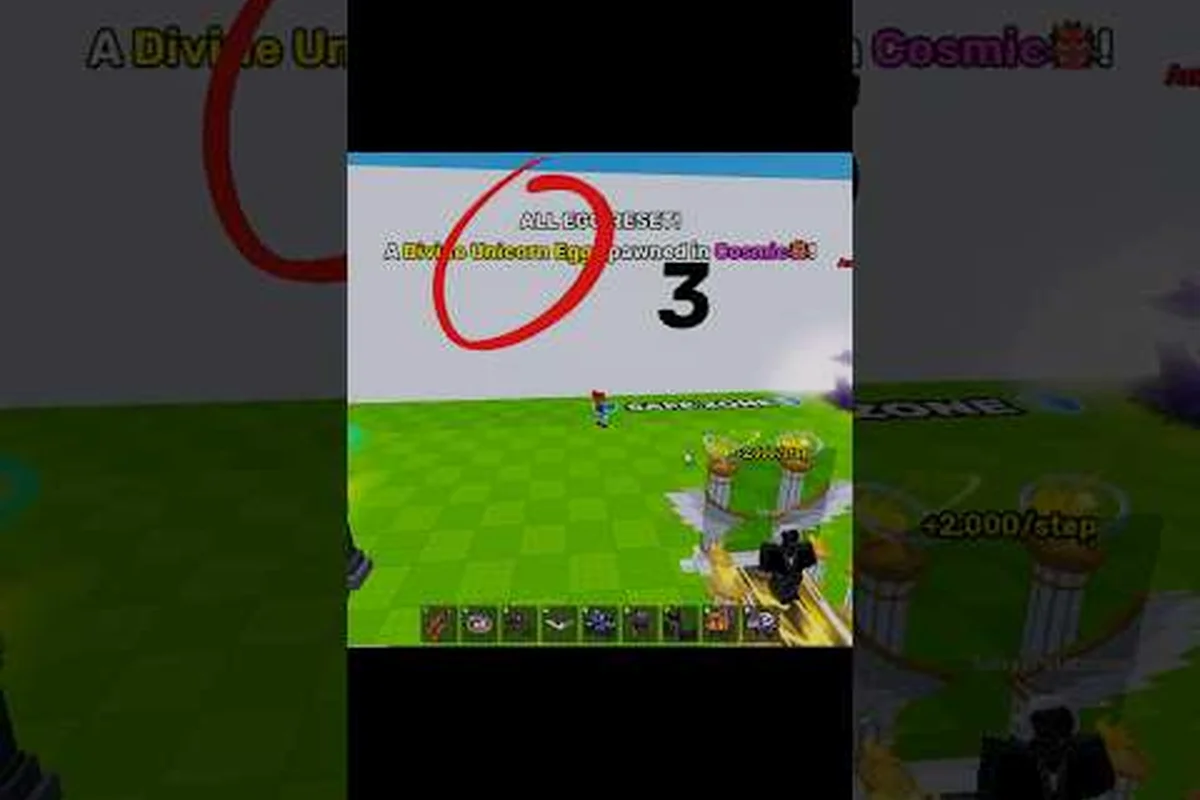
Content creators chasing this exact outcome have documented how punishing the process is. Ayerush Gaming's run at stealing the rarest Divine Unicorn egg shows the risk side clearly: guards and bosses interrupt risky steals, and the chase fails more often than it succeeds. That failure rate is precisely why a mutated Divine Unicorn carries the value it does — the supply is gated behind both luck and execution.
That benchmark only matters if you know which species are actually worth rolling mutations on in the first place. The complete pets list breaks down every species by rarity tier and how each one is obtained, so you can compare a Divine Unicorn against mid-tier options before committing eggs to a risky steal. This matters because mutation value scales with the base species — a rare size or special variant on a common pet is worth far less than the same roll on a top-tier species, and the list makes that gap explicit.
Reading the Size and Color Roll Together
Most players evaluate mutations one axis at a time, which leads to bad decisions. A giant roll on a low-tier species is worth less than a modest color roll on a top-tier species, because species rarity sets the ceiling and the mutation only multiplies within it. Learning to read both axes at once is the single biggest skill upgrade available here.
The comparison below shows how the two axes interact in practice. Take a Giant roll on a Common species: the size mutation pushes the pet toward the top of its own tier, but the Common ceiling still caps its trade value below an untouched Rare. Flip the case — a Tiny roll on a Divine species — and even a "weak" mutation lands in premium territory because the Divine base carries the multiplier. This is why a Rare size on a Legendary pet can out-trade a Giant roll on an Uncommon one, and why the combined roll column, not the mutation label alone, is what serious traders actually price against.
| Species Tier | Weak Mutation | Strong Mutation | Combined Roll |
|---|---|---|---|
| Common | Minimal value | Modest value | Niche collector interest |
| Uncommon | Low value | Decent value | Solid trade stock |
| Rare | Moderate value | High value | Strong trade bait |
| Legendary | High value | Very high value | Premium tier |
| Divine | Very high value | Premium tier | Best-in-class |
The practical takeaway is a simple rule: never judge a mutation in isolation. Check the species first, then the modifier, then whether the two reinforce each other. A full stack on a Divine species is the only combination that reliably sits at the top of every trade board, and everything else sorts below it in a predictable order.
Players who want to understand how duplicate pets fit into this picture — including when to trade a mutated duplicate versus keep it — will find the strongest pets and trade value guide useful for setting asking prices. Setting an asking price from the start keeps you from panic-selling during a dry streak or overpricing a duplicate the market has already moved on from.
Practical Tips for Hunting Rare Mutations
Chasing rare outcomes is a volume game with a strategy layer on top. The players who land the best pulls are not luckier — they hatch more efficiently and they know when to stop. Concretely, that means treating each session as a sample rather than a lottery ticket: if you run 50 hatches and see zero size shifts toward giant or tiny, the smart move is to change your input species or reset your approach rather than keep feeding eggs into a cold streak. Efficient hunters also front-load their highest-value eggs into the first batch of a session, because a giant or tiny pull early tells you the session is running hot and justifies pushing volume, while a flat opening batch is your signal to cut losses and bank the eggs for later.
-
Hatch in batches, not one at a time — batching makes it easier to spot patterns and compare outcomes across a session
-
Log your results — even a rough tally of how many hatches produced a size shift tells you whether your session is running hot or cold
-
Do not trade a fresh rare pull immediately — prices settle after the first wave of listings, and early sellers routinely undersell
-
Prioritize species before modifiers — a strong mutation on a weak species is a trap that eats your best rolls
-
Keep one of every extreme — one giant and one tiny of the same species is worth more as a pair than as two separate trades
Signs Your Mutation Grind Should End
There is a real cost to over-hatching. Inventory space fills up, duplicate pets pile up, and the marginal value of each new roll drops as your collection matures. Community experience suggests setting a soft cap — a fixed number of hatches per session — and stopping when you hit it, regardless of whether the last roll was good.
Storage pressure is the usual reason players break that rule and then regret it. The pet storage limits guide explains when unlocking more slots is worth the spend and when it just delays a decision you should make anyway. If you are farming rare mutations in volume, knowing that cutoff in advance also protects your best rolls from being accidentally released during a mid-session cleanup.
Mutation Value at a Glance
Pulling everything together, here is how the main mutation families compare on the two things that actually matter: how often they appear and how much they move a pet's worth. Size shift mutations split into two distinct brackets — the frequent small-size rolls that barely nudge a pet above its base species value, and the rare extreme rolls (giant pets and tiny pets alike) that command premium prices purely on scarcity. Color shifts sit in the middle as the steadiest collection-building option, while Aura variants are the rarest single modifier you can hatch, which is exactly why they anchor display inventories rather than trade flow.
| Mutation Family | Appearance Rate | Value Impact | Best For |
|---|---|---|---|
| Size shift (small) | Frequent | Low to moderate | Quick trades |
| Size shift (extreme) | Rare | High | Prestige and premium trades |
| Color shift | Uncommon | Moderate | Collection building |
| Aura variant | Very rare | High | Display |
| Combined full stack | Extremely rare | Highest | Inventory centerpiece |
The pattern is consistent across every tier: the more modifiers a single pet carries, the steeper the value curve. A pet with one modifier sits close to its base species value, while a pet with three sits in a category of its own. That is the entire logic of the mutation economy in one sentence, and it holds whether you are hatching commons or chasing Divine Unicorns.
Frequently Asked Questions
How rare are Bike For Egg rare mutations compared to normal hatches?
Size shifts are the most common modifier and appear regularly across a normal hatch session, while color shifts are noticeably less frequent. Combined rolls that stack size and color sit at the bottom of the frequency table, and full-stack variants with an aura are the rarest outcomes players report.
Do giant pets always beat tiny pets in value?
No. Giant rolls are easier to verify in a trade, which makes them more liquid, but tiny rolls have their own collector demand because many owners undervalue them. The deciding factor is species rarity first, then whether the size extreme matches what the buyer is collecting.
Can a mutation appear on any pet species?
Yes, modifiers roll independently of species, so any pet can hatch with a size or color shift. That said, the value of the mutation scales with the base species, which is why a strong roll on a Divine Unicorn outperforms the same roll on a common by a wide margin.
What should I do with a mutated duplicate?
Hold it until you have checked current listings rather than dumping it immediately. Mutated duplicates are the easiest items to trade upward because they carry both collection appeal and stat value, and the strongest pets trade guide is a reasonable reference for pricing.
Is it worth chasing a full-stack variant on purpose?
Chasing a specific full-stack outcome is not efficient because the odds are too thin to target directly. The better approach is to hatch consistently, keep every extreme roll you land, and treat a full stack as a bonus rather than a goal you can grind toward on demand.
Rare mutations in Bike For Egg reward patience more than any single trick. Track what you hatch, judge every pull by species first and modifier second, and hold your best extremes instead of flipping them in the first hour. That combination is what separates a collection that grows in value from one that quietly drains away.